To truly beat sleeping sickness we need to treat animals too

Progress in eliminating the parasite will depend on uniting key players in the fight against livestock disease

Written by Alec Evans, African Animal Trypanocide Development Project Leader, GALVmed. Originally published by the UK Telegraph.

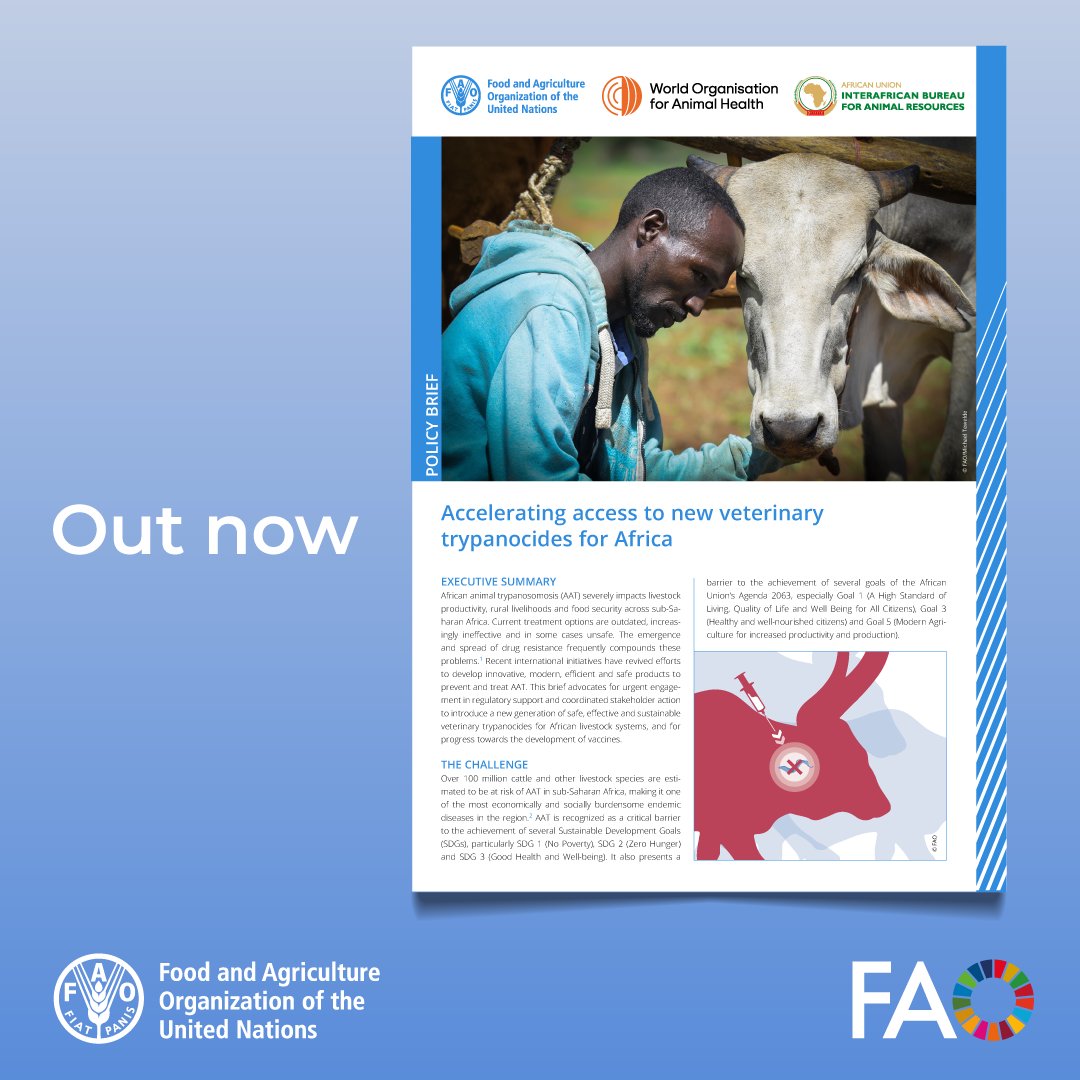
It often starts with swollen lymph nodes and weight loss before robbing the sufferer of sleep, energy and mobility. Transmitted by tsetse flies, sleeping sickness is one of Africa’s most feared diseases in people, and its animal version – African animal trypanosomosis (AAT), widely known in Africa as nagana – is just as devastating.

Yet, despite a shared vector, the global response to controlling the human and animal forms has been worlds apart.

In recent years, 10 African countries, including Kenya, have successfully eliminated sleeping sickness, or human African trypanosomiasis (HAT), with Angola also on the verge of achieving the same milestone. Meanwhile, African animal trypanosomosis (AAT) continues to devastate livelihoods across more than 37 African countries, costing rural economies up to $4.5 billion per year.

If Africa can mobilise the investments needed to eliminate sleeping sickness in people, it can and must show the same commitment to protecting the animals that sustain its economy.

Across sub-Saharan Africa, the spread of tsetse flies covers up to 10 million km², exposing an estimated 50 million cattle to AAT infection. Once infected, animals suffer dramatic reductions in milk and meat yields, loss of body condition, and become too weak to plough fields or reach markets.

For small-scale producers, a sick animal can lead to cascading financial losses – less food on the table, reduced income, difficulties in paying school fees and higher veterinary costs. The disease also has a direct impact on human nutrition, particularly for families that rely on livestock protein and dairy for their essential dietary needs.

Despite the scale of this impact, AAT remains a neglected disease. Unlike HAT, which has benefitted from decades of global investments and control programmes including two new drugs developed in the past 10 years, AAT has seen almost no comparable progress.

There are currently no vaccines in commercial development. Therapeutics rely primarily on two molecules – diminazene and isometamidium – both developed more than 60 years ago, whilst alternatives such as homidium are still in circulation despite being known carcinogens. Poor regulation further exacerbates the problem with livestock keepers at the mercy of sub-standard, frequently counterfeit products.

This innovation gap is compounded by other challenges. According to the UN’s Food and Agriculture Organisation (FAO), more than 17 countries in Africa, from Rwanda to Nigeria, have reported treatment failure with existing drugs due to widespread drug resistance. At the same time, few diagnostic tools exist for use in the field, often resulting in farmers treating animals based on guesswork rather than confirmed infection, which further accelerates resistance.

GALVmed’s African Animal Trypanosomosis Programme, which began in 2011 and has been funded by the UK Government and the Gates Foundation, is one of the very few coordinated efforts addressing this innovation shortfall.

As with sleeping sickness in humans, progress in eliminating AAT will depend on uniting key players in the fight against livestock disease from across the public, private and third sectors. To address this, GALVmed has collaborated with more than 20 research partners, comprising a global mix of private pharmaceutical companies, universities, and public research institutes to develop improved solutions for reducing the impact of this major African cattle disease.

But developing new drugs is only a part of the solution. Improved regulatory systems, such as the East African Community’s Mutual Recognition Procedure, are also essential to ensure that quality-assured veterinary drugs are registered and reach markets more quickly and consistently.

Progress made through tsetse control programmes also demonstrates that coordinated, long-term strategies can significantly reduce AAT infections. For example, Botswana successfully eradicated tsetse flies by using repeated aerial spraying of insecticides and traps that attract and kill the flies. In Senegal, programmes releasing sterilised male flies to interrupt tsetse breeding cycles, alongside the use of traps, have decreased tsetse populations by up to 98 per cent.

These tsetse control programmes, and more, must be matched with investments to develop safer, more affordable, and more effective veterinary drugs, delivered with the same urgency that has been applied to human health. With this approach, African countries can finally move closer to eliminating AAT and other economically damaging diseases.

The disparity between the progress in eliminating the disease in humans and animals highlights an innovation and investment gap in animal health. With new, safer veterinary drugs in development, stronger regulatory reforms, and proven tsetse-control approaches already succeeding in some countries, governments and investors have a clear path forward.

By improving access to existing solutions and accelerating investments in the next generation of veterinary drugs, African countries can ensure that rural producers are no longer left alone to fight diseases that have held back agricultural development for far too long.

Africa has already shown that sleeping sickness in people can be eliminated. With the right commitment, the same success can be achieved for animals and the rural economies that depend on them.

Vaccinated day-old chicks brings transformational change for Africa’s farmers

This blog was written by Dr Tom Osebe, (Senior Manager, Commercial Development & Impact, Africa, GALVmed) and Dr Marie Ducrotoy (Senior Manager Development Projects and Partnerships, Ceva Santé Animale). Originally published by Farming First.

The power of poultry to boost development in Africa is well known. Cheap to buy and quick to rear, chickens offer small-scale livestock producers across the continent – especially women – an opportunity to increase incomes and improve diets for themselves and their families. It is no surprise that an estimated 1 billion of the world’s poorest people depend on poultry for their livelihoods.

However, poultry diseases remain a persistent threat to small-scale chicken production in Africa. In contrast to other parts of the world where poultry production is integrated and dominated by large players who both produce and rear their chicks, Africa’s fragmented value chain presents unique challenges. African poultry farmers are served by small- and medium-sized hatcheries and many of these have not invested in vaccine technology. 

Compounding the issue is a lack of farmer awareness regarding the existence and benefits of vaccinated day-old chicks. This lack of demand perpetuates a cycle where smaller hatcheries have no commercial incentive to invest in vaccination technology. As a result, the burden of vaccination falls on the farmers themselves. 

Farm vaccination, however, is fraught with challenges. It is technical and requires adherence to a cold chain to ensure vaccine efficacy. Even under optimal conditions, on-farm vaccination typically results in 80 per cent of the flock being vaccinated.

De-risking hatchery vaccination

It seemed like an intractable chicken-and-egg problem: to increase the production of vaccinated day-old chicks in Africa, we need increased demand for them from farmers. But increasing demand requires farmers to buy vaccinated chicks through a better understanding of the value.

Fortunately, we have been able to work on a project that has succeeded in breaking the impasse – one that holds promise for poultry production across the continent. In 2021, Ceva Animal Health teamed with GALVmed, with the support of the Gates Foundation, to implement a game-changing four-year project, PREVENT (Promoting and Enabling Vaccination Efficiently, Now and Tomorrow).

PREVENT used a two-pronged approach to enable medium-sized hatcheries in 11 sub-Saharan African countries to produce high-quality, vaccinated day-old chicks. The funding financed the supply of the necessary vaccination equipment and improved the vaccination facilities, making it financially more accessible for hatcheries to then purchase vaccines. This then enabled Ceva to supply its vaccines to these hatcheries – opening up a major new sector of Africa’s poultry industry.

Crucially, to increase demand for vaccinated chicks, PREVENT also raised awareness of their value among small-scale producers. The project trained 225 field technicians, and of these, 70 field technicians conducted over 20,000 farm visits and held almost 2,000 farmer meetings attended by more than 23,000 women and 20,000 men. As well as highlighting the benefits of purchasing vaccinated day-old chicks, field technicians helped farmers improve their management practices and took samples to better understand circulating diseases and antimicrobial resistance.

Raising farmer expectations

We were delighted – and even a little surprised – to see how effective this approach proved. The sudden increase in farmer demand for vaccinated chicks encouraged a rapid shift in small- to medium-sized hatcheries. Between 2021 and 2025, 37 hatcheries in 11 countries produced 202 million day-old chicks thanks to the project. Of these, 90 per cent – 182 million chicks – were vaccinated, with a total of 494 million vaccine doses administered. This has created a net economic benefit of $43 million over the course of the project.

But these numbers, as impressive as they are, do not tell the full story. By increasing the availability and accessibility of fully vaccinated day-old chicks, and by raising smallholder awareness of their value, PREVENT has achieved a fundamental and permanent shift in farmer understanding and expectations in the countries where it operated. Small-scale poultry producers are no longer willing to settle for unvaccinated chicks.

This new attitude has laid the foundations for a prosperous, self-sustaining and increasingly competitive vaccine market that reaches small-scale producers and reduces vaccine inequality. With PREVENT now coming to a close, we are happy that this legacy will ensure day-old vaccinated chicks continue to reach poultry farmers without the need for additional donor funding.

“PREVENT is a good example of collaboration between parties where the vision was not only realised, but surpassed,” says Dr Pierre-Marie Borne, Senior Public Affairs at Ceva Santé Animale, who was the pioneer of PREVENT and saw the vision of how hatchery vaccination had the potential to impact poultry businesses and millions of small-scale producers across Africa.   

Boosting smallholder livelihoods

And it is these poultry farmers who are now leveraging PREVENT’s achievements for their own empowerment and commercial success. “The results have been so good – it has added to my profits because I no longer have losses as before,” says Victoria Oladijiri, a poultry farmer from Nigeria who switched to purchasing vaccinated chicks as a result of PREVENT. “I use the profits for provisions at home and for so many other good things.” Other farmers to benefit from PREVENT have reported similar positive changes. 

As PREVENT comes to an end, it is our hope that stories like Victoria’s will become the norm throughout Africa, as a thriving vaccines market breaks down the vaccine inequality that has for too long held back the development potential of poultry. We believe the project’s model of de-risking investment in smaller hatcheries, while increasing farmers’ understanding and expectations, holds promise across the continent – both in poultry and even other animal production sectors.

Barriers in the livestock health market: Service provision

Animal health services and products are still out of reach for millions of Small-Scale Producers (SSPs) in Sub-Saharan Africa (SSA) and South Asia (SA). One of the reasons for this is that even though SSPs account for a large number of animal keepers in SSA and SA – 35% of cattle head and 43% of sheep and goat head of world respectively, they are scattered, concentrated in rural areas and operate their production on low input, low output system. This makes animal health service provision challenging. SSPs also have less to spend on animal health further pushing away veterinary service from their reach. A veterinary service provider needs to travel long distances to visit just a few farms and a smaller number of animals, which makes their services costly. Consequently, SSPs tend not to treat their animals or in the instances that they do, they get advice from less qualified people and use low-quality medicines inappropriately. This often leads to bigger issues such as antimicrobial resistance (AMR).  It also means a large percentage of animal heads are dying before maturity or performing below capacity after surviving, in absence of effective and reliable animal health service provision.

Filling the gap

More veterinarians are needed to serve and supervise Veterinary paraprofessionals (VPP) work. But this is easier said than done and has been a problem for decades. The ratio of veterinarians to livestock in African countries is 20 times lower than the developed part of the world like Denmark, France, USA. In India, only half of the required number of vets are available currently. In SSA and SA, a small number of veterinarians along with VPPs are expected to carry out a range of animal health services – from vaccination to diagnosis and treatment. This is a big challenge for public, private, and non-profit sectors involved in overall livestock and poultry development to help a large number of SSPs.

One solution that has been tested is filling this gap with trained community-based animal health workers, who perform basic services like vaccination and de-worming. GALVmed for example has worked with trained community animal health workers in supervision of veterinarians in the delivery of millions of doses of Newcastle Disease vaccines to backyard poultry producers. These projects not only served SSPs at their doorstep but also created sustainable employment in rural areas. However, it is not without challenges; including lack of proper visibility of their operations by few veterinarians, making their work difficult to track to ensure quality.

What next then?

The demand for veterinary services in these regions is only going to increase, but the number of vets perhaps not so.  Which is why we need to look at other innovative measures that can help us reach SSPs with services and products. Digital interventions like tele-health platforms have the potential to address some of these requirements, considering the fast growth in the use of the Internet and mobile phones.

Tele-health platforms can quickly connect animal health service providers with SSPs and cut down the unwanted expense in travel and time. Veterinarians can supervise the work of VPPs remotely; diseases and outbreaks can be reported quickly; quality consultation and prescription can stop the use of inferior and fake medicine, and can also help in reducing AMR. Consequently, more animals will survive and produce more to contribute to overall food and nutritional security.

GALVmed is working with partners and veterinary authorities to develop a Telehealth and e-commerce platform with the aim of making products and veterinarian-supervised services available and accessible to SSPs. The Telehealth and e-commerce platform is one of three proposed platforms to deliver a comprehensive, financially sustainable solution that will unlock new opportunities for growth in the animal health industry.

Written by Peetambar Kushwaha, Senior Manager of Commercial Development & Impact, South Asia.