Healthy livestock systems are fundamental to resilient communities, sustainable livelihoods and food security across Africa, yet controllable animal diseases continue to pose serious burdens for small-scale producers.
One such disease is Animal African Trypanosomosis (AAT) which devastates livelihoods across more than 37 African countries, costing economies up to $4.5 billion per year. Despite the impact of the disease, there are currently no vaccines in commercial development, and the current treatments, which have been in use for more than 50 years, are increasingly challenged by treatment failures, drug resistance, and the circulation of falsified or substandard products.
“The success achieved against human African trypanosomiasis shows what is possible when global partners align around a shared goal, and this same unified momentum is now essential to protect the animals that underpin rural livelihoods.” – Alec Evans, African Animal Trypanocide Development Project Leader at GALVmed.
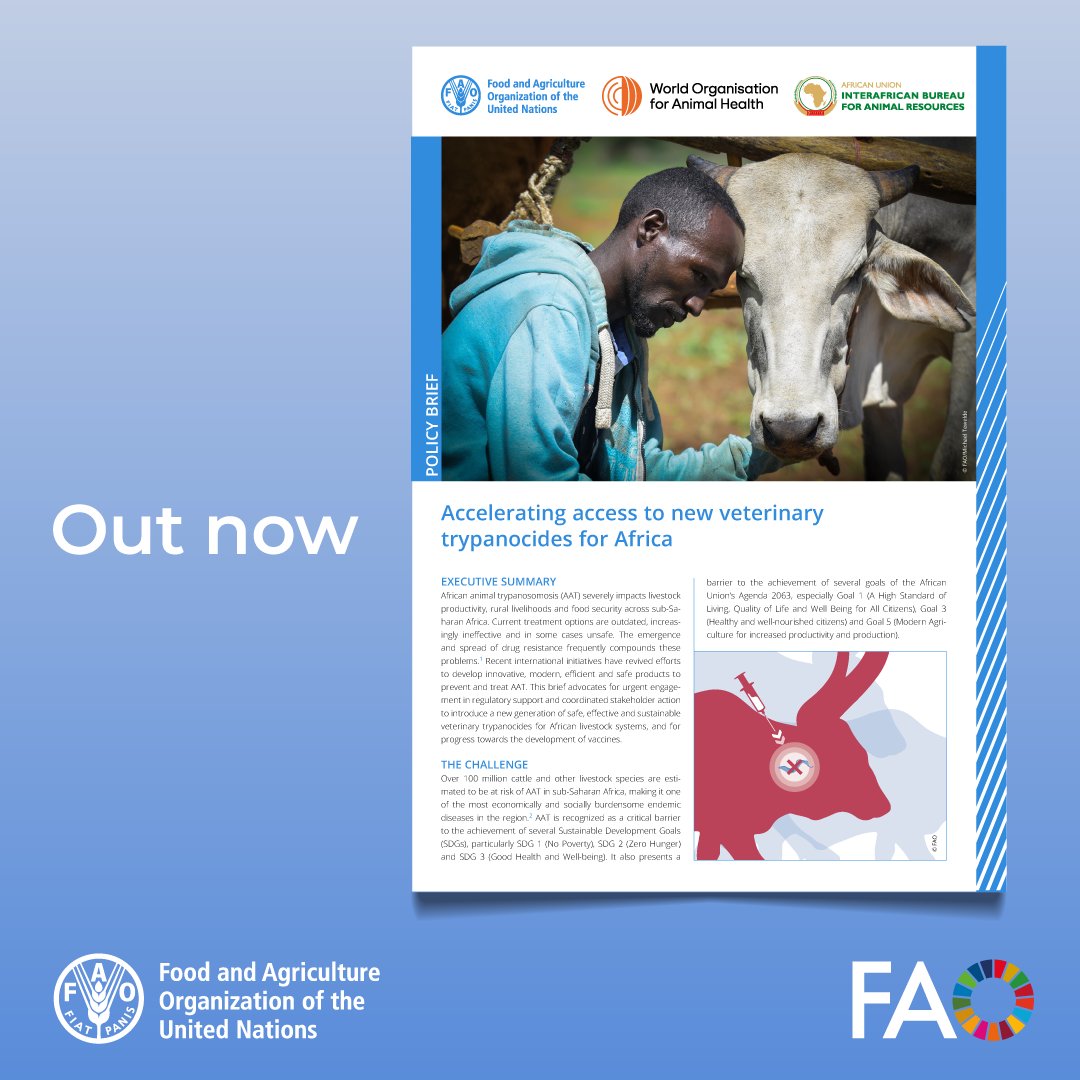
A new joint policy brief by the Food and Agriculture Organization of the United Nations (FAO), the World Organisation for Animal Health (WOAH) and the African Union Inter-African Bureau for Animal Resources (AU-IBAR) advocates exactly for that – a multi-stakeholder and multi-sectoral collaboration to deliver a new generation of trypanocides for the African livestock sector.
For GALVmed, which has been conducting research and collaborating with partners to create a new solution to AAT, this step reinforces the importance of advancing next-generation trypanocides alongside regulatory harmonisation efforts that ensure these innovations reach the farmers who need them most.
Bringing new tools to the market, although a welcome step, is not enough. Addressing this neglected disease will require coordinated investment in research and commercial development, as well as regulatory harmonisation to accelerate the availability of safe, effective new trypanocides. “I In a landscape marked by treatment failures, limited diagnostic capacity, drug resistance, and the circulation of poor-quality products, GALVmed aims to drive overall change. Its goal is to support the development of a new trypanocide while supporting the systems needed to deliver quality-assured treatments, ensuring they reliably reach livestock keepers, even in the most remote areas.”
This joint call to action is routed in the progressive control pathway for animal trypanosomosis, and in recommendations issued by FAO expert consultations and African Union scientific conferences.
DOWNLOAD THE POLICY BRIEF: https://doi.org/10.4060/cd9735en