Newcastle Disease vaccination in India creates new job opportunities as well as saving poultry

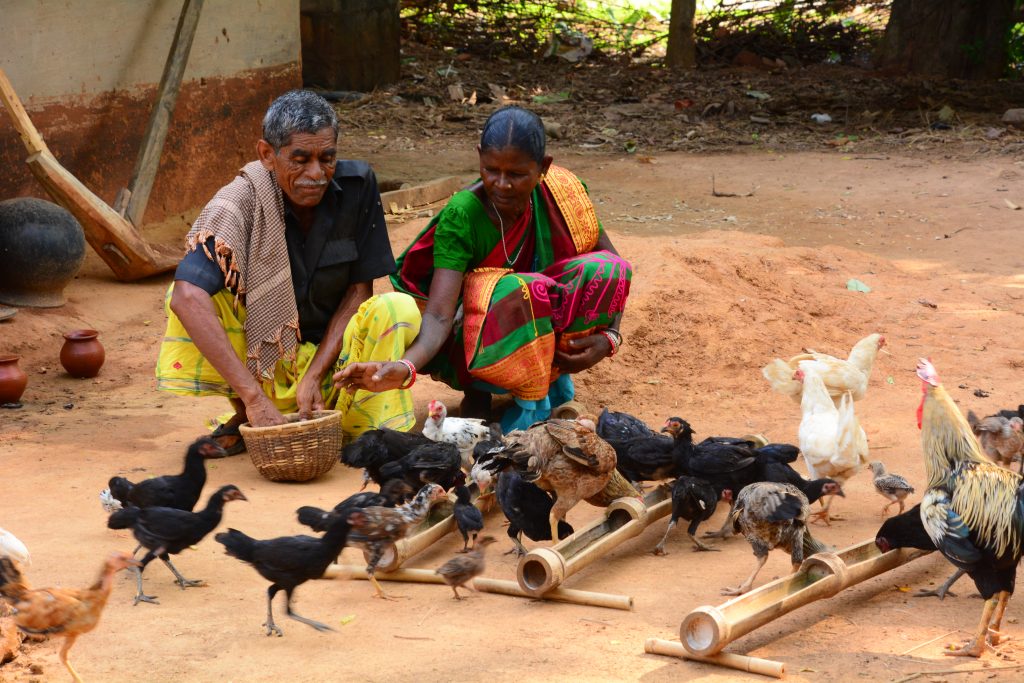
Newcastle Disease (ND) vaccinators in Mayurbhanj district of Odisha state in India can today look towards bright prospects. The demand for their services has not only spawned new employment opportunities within their locales, but has also helped farmers protect their poultry flocks which would routinely be ravaged by Newcastle Disease outbreaks. In addition, the chance to become a poultry vaccinator and the income that comes along with it has empowered rural women, who can now use their hard earned money to invest in a better future for their families. Access to ND vaccination training in Mayurbhanj district of Odisha has been facilitated by the Bhodal Milk Producers Co-operative Society (BMPCS), a local NGO, and Heifer International in partnership with non-profit Global Alliance for Livestock Veterinary Medicines (GALVmed).

Thirty-seven-year-old, Govardhan Naik from Suryapada always wanted to set up his own business. A university graduate, he first heard of an opportunity to be an ND vaccinator through a friend. After a four day training course that covered vaccination and first aid, he ventured into the field as a trained vaccinator. This was about four years ago.

Govardhan gets his supplies of the ND vaccine from a market at a nearby town, Kosta. He has also procured a refrigerator to store the vaccines and a motorcycle to help him reach the farmers. He serves around 400 households vaccinating close to 5,000 chickens every month. Providing additional services such as deworming and first aid, Govardhan brings home a net income averaging INR 8,000 (US $ 122) monthly, which has positively contributed to the economic well-being of his family.

His work as a vaccinator has brought him recognition from the locals and several of his friends have now shown an interest in the occupation, with one of them now an active vaccinator. “I will continue as a vaccinator even after this current project ends,” he says, referring to the ongoing GALVmed sponsored initiative, much to the relief of numerous households who are grateful for his services and want him to continue.

The effects of the poultry vaccinators’ work on the local economy are visible. When Govardhan first began vaccinating, an average village consisting of about 20 households would have a maximum of 70-80 chickens. After the first year of vaccination, the number skyrocketed to over 1,000. Farmers’ earnings from poultry rearing increased.

“If you work as a vaccinator, you can have an independent enterprise,” he adds.

A vial of the ND vaccine costs between INR 75 (US $1.16) and INR 100 (US $1.55). One vial can vaccinate up to 100 chickens. A vaccinator can charge INR 2 (US $ 0.03) per vaccination. There is also additional income derived from services such as deworming and first aid. For example, Govardhan earns another INR 3,000 or (US $46) from these additional services.

The involvement of women as vaccinators has also contributed to their economic empowerment and participation in decision making within the family unit and their communities. Mamata Mandal, 42, from Tikayatpur village in Ras Gobindpur block, is one such vaccinator. Mamata first got to know about vaccination from Anup Behra, the team leader of Unnayana, a local NGO. Coming from a family that has traditionally reared poultry and having witnessed high mortality of the birds, she readily took up the occupation.

Mamata procures her supplies from a small shop, about 7 km away from her village. Carrying a cool box to store the vaccines, she serves around 250 households in a 3km radius and vaccinates around 5,000 birds. Her services get her an income of INR 3,000 (US $ 46) every month. “With this income I can school my children and buy agricultural inputs for the farm,” she says.

BMPCS started the programme with just 7,500 families in 2011. By December 2016, the NGO had already reached more than 175,000 households. Today BMPCS supports more than 320 vaccinators in the project area.

Heifer International’s project was launched in September 2015. By May 2017, they had served as many as 62,316 households. Today, Heifer International supports more than 218 active vaccinators in the field.

Newcastle disease vaccination has helped turn around the lives of many individuals in Mayurbhanj. The vaccinators stand at the frontlines in the fight against the deadly poultry disease and their services are benefitting many smallholder farmers. And with a stable demand for their services, the vaccinators can hope for a better future.

Written by: Deepak Bhadana and edited by Prasenjit De of Alternatives for GALVmed

Regional sensitisation workshop on Newcastle Disease control in village poultry in West Africa

A two-day workshop on Newcastle disease (ND) control in West and Central Africa brought together 38 representatives from the government and private sectors to discuss key challenges and potential interventions in the vaccine delivery and administration in the regions.

The event, which ran from 29-30 June 2017 in Ouagadougou, Burkina Faso, included presentations, discussions and a field visit to Koudougou where participants met and spoke with backyard poultry farmers and vaccinators. Delegates attending the event represented the local supply chain – veterinarians, vaccinators, farmers as well as ND vaccine manufacturing companies such as MCI Sante Animale and distributors (LaProvet and their local partners CAPHAVET and CPAVI).

Delegates agreed to keep coordinating their activities and sharing best practices noting that Burkina Faso is the leading country in the region in terms of vaccinating against ND.

The workshop was co-organised by GALVmed and the West African Network for the Promotion of Livestock in Rural Areas (REPAC).

Written by: Julius Singoma, GALVmed’s Policy Manager

World Zoonoses Day: Spotlight on the most common zoonotic disease

July 6th: Today is World Zoonoses Day – a date that has particular relevance in light of the global Brucellosis Vaccine Prize, a US $30 million prize competition inviting vaccine developers to submit proposals for – and ultimately develop – a suitable vaccine for use against Brucella melitensis in small ruminants across the developing world.

Brucellosis is the most common zoonotic disease globally; approximately 500,000 new human cases are reported annually, and the effects can be devastating. It is a major challenge for human and animal health in endemic countries – and one which requires a One Health solution.

To further understand the challenges involved in controlling brucellosis, we turn to renowned zoonotic brucellosis specialist Dr Jacques Godfroid, who outlines issues with the current programs and the need for a new vaccine:

Can you give us an insight into why brucellosis is such a widespread issue in the developing world?

I feel there are two main issues: firstly, a lack of awareness of the impact of brucellosis on livestock productivity among farmers. And secondly, brucellosis control and eradications schemes for livestock have never been prioritized by the local governments, so there has been a lack of funding for such programs in the developing world.

Why do you think it is an area that has not been prioritized for funding?

Brucellosis is a zoonotic disease – so in order to make it a priority for some authorities to spend money on brucellosis control programs, it is important to make the connection between the control of the disease in animals and the impact that has on the wellbeing and health of people.

What are the restrictions in terms of current control programmes?

For sheep and goats, the main problem is that in a developing country you will have access to the whole livestock population only once a year, and so you have to vaccinate every single animal at that point, regardless of its age and pregnancy status – which means the animal could well be pregnant when vaccinated. Drawbacks associated with the current vaccine mean that it may induce abortion at a rate of up to 100% if given to pregnant animals, so there is definitely a market need for a vaccine that is safer than those currently available.

So you feel a new vaccine would be welcomed by farmers in the developing world?

If the relevant authority or veterinarian is able to tell farmers in developing countries: “by using this product, you will enhance the health and the production of your animals, and it’s safe for your animals and for you”, that would make a major impact – not only in the control of the disease but also for the welfare of the people living in the community. That would be a major breakthrough.

———————————————————————————————————————————————————

The Brucellosis Vaccine Prize competition aims to encourage animal health innovators to develop and register a vaccine that is efficacious, safe and viable for use against Brucella melitensis in small ruminants across endemic areas.

Three Milestone 1 prizes of US $100,000 have recently been awarded to animal health, biotech and academic organizations across the world; seven such prizes remain available. Find out more and apply at www.brucellosisvaccine.org

Experts take stock of the East Coast Fever vaccine performance in Uganda

On June 8, 2017, the Global Alliance for Livestock Veterinary Medicines (GALVmed) convened a workshop in Kampala, Uganda, aimed at presenting the findings on the safety and protection of East Coast Fever-Infection Treatment Method (ECF-ITM) vaccine at farm level in the country.

The findings were from an on-farm ECF-ITM study in Uganda supported by GALVmed in 2016-2017. The study involved 378 head of cattle, which showed 98 percent protection against ECF parasite field challenge, according to Professor Antony Musoke, a GALVmed consultant on the ECF vaccine.

“Throughout the immunisation process we found that the vaccine was very safe, there were no adverse reactions at the site of inoculation; and the animals were in very good condition,” said Professor Musoke. The findings also indicated that the vaccine commonly known as ‘Muguga Cocktail’ is a cheaper alternative to treating ECF for cross-bred cows. The average cost of vaccinating cattle against ECF is US $10 compared to the cost of treatment which is averaging US $20.

According to Dr. Anna Rose Ademun, the acting Commissioner for Animal Resources in Uganda, though the findings are promising, there is need for increased farmers’ awareness on the vaccine’s existence and protection.  That’s because ECF is devastating the country’s growing dairy industry since the high yielding cattle milk breeds in the sector are more vulnerable to the disease than indigenous ones.

“It’s important to inform farmers on the usefulness of the vaccine, especially the fact that it will save them on the weekly dipping or spraying expenses,” said Dr Ademun.  She also cited the need for farmers to be informed that the ECF-ITM vaccine offers a lifetime protection to encourage them to vaccinate. However, it is important to note that dipping or spraying against ticks should not be stopped as there are other tick-borne diseases not prevented by vaccination.

The nearly 50 workshop attendees consisting of researchers, vaccine distributors, farmers, and Uganda’s  Ministry of Agriculture, Animal Industry and Fisheries (MAAIF), and drug regulatory authority officials also discussed the way forward for ECF-ITM vaccine delivery in the country.

With the on-farm study proving successful, livestock stakeholders in Uganda are working to have the vaccine registered by the country’s National Drug Authority (NDA). The registration is subject to the vaccine producers, the Centre for Ticks and Tick-Borne Diseases (CTTBD) in Malawi complying with Good Manufacturing Practice (GMP) standards as stipulated by NDA’s veterinary drug regulation division.

Since 2015, the NDA has performed inspections of the CTTBD facilities in Malawi – Africa’s only ticks and tick-borne diseases centre where the ECF-ITM vaccine is produced for the continent, and also of the distribution facilities in Uganda.  These recurring inspections are aimed at ascertaining the safety, quality, and efficacy of the ECF-ITM vaccine.

“Following the successful results of the re-inspection, we are hoping the product (vaccine) will be registered before the end of this year,” said Dr Noel Aineplan, NDA’s veterinary drug regulation division coordinator. Registration will clear the ECF-ITM vaccine for the Ugandan market, in a country with 13,623,000 heads of cattle, as per MAAIF’s 2014 data.

To ensure continued supply of the vital vaccine, GALVmed has been working to increase the efficiency of vaccine production at CTTBD. Boosting CTTBD’s ECF-ITM vaccine’s production capacity by GALVmed will make the centre financially viable. “That is the only way sustainability of the vaccine is guaranteed which is very important for farmers who wish to buy this product (vaccine), to prevent deaths due to ECF,” said GALVmed Chief Scientific Officer Dr Jeremy Salt.

Since 2013 GALVmed has also been supporting ERAM, a veterinary pharmaceuticals company and vaccine distributor to get the ECF-ITM vaccine to Ugandan farmers. ERAM and SCOPEVET were the two Ugandan ECF-ITM distributors that vaccinated the 378 cattle monitored in the just concluded on-farm study by the GALVmed consultants, Drs Fred Musisi and Robert Mutaka-Nsubuga. Through this support 100,000 animals from 20,000 households have been vaccinated against ECF from 2013 to 2017; and a total of 200 Ugandan ECF-ITM vaccinators trained both in Uganda and Kenya to administer the ECF-ITM vaccine.

Developing the market for unserved smallholder poultry keepers in India

Collectively, smallholder poultry farmers around the world provide a large market for livestock veterinary products. But this crucial segment has traditionally been unserved by pharmaceutical companies, often because smallholder markets are viewed as non-profitable and not sustainable. However, more and more smallholders are willing to pay for veterinary products such as vaccines to protect their crucial investments. In India, smallholder farmers rearing poultry are proving that a market does exist and service provision is profitable to vaccine manufacturers, local distributors, vaccinators and even to the farmers themselves who are benefiting from the Newcastle Disease vaccine.

New tools to tackle porcine cysticercosis in rural Uganda

Porcine Cysticercosis is a serious zoonotic disease prevalent in many parts of the world especially in developing countries, where sanitation remains a challenge. It causes 30% of human epilepsy cases in the developing world.

A GALVmed-led project in Eastern Uganda is expected to significantly reduce cases of Porcine Cysticercosis in pigs and break the cycle of infection to humans. Already the project is eliciting some positive response from farmers whose pigs have been vaccinated and de-wormed using a vaccine and a dewormer developed in collaboration with our partners Indian Immunologicals Ltd, MCI Sante Animal and the University of Melbourne.

Further information

Watch our video on controlling porcine cysticercosis in Udaipur, Nepal

Economic & health impacts of vaccinating poultry against Newcastle disease in Burkina Faso

In honour of World Veterinary Day (29 April), GALVmed would like to thank its many partners and veterinarians who ensure our programmes reach small-holder farmers in Africa and South Asia.

We share insights from two of our veterinarian partners in Burkina Faso who are working to tackle Newcastle Disease – a deadly disease that can kill up to 80-90% of a flock.

The annual global event, hosted by the World Veterinary Association, aims to highlight and promote the different facets of work performed by veterinarians and to raise awareness of their contributions to improve animal health and welfare as well as public health.

For more information on our work, visit our website.

Creating innovative livestock health care products & services targeted to smallholder farmers

Livestock production in smallholder systems exists throughout the developing world. Livestock contributes considerably to the livelihood strategies of the poor and can be an important source of income and nutrition.

However, smallholder farmers consistently battle livestock diseases, most of which are preventable with vaccination. The challenge has always been a gap in product and service provision that is targeted mainly to the smallholder markets, as big pharmaceutical companies have been reluctant to invest in these markets for a number of reasons. Some of these reasons have been: the smallholder market is difficult to penetrate, requires time and is often non-profitable. But the smallholder market is undoubtedly still a large one, supporting the livelihoods of 600 million poor smallholder farmers in the developing world. This market is increasingly becoming more organised to tap into products and services offered by pharmaceutical companies.

Consequently, it is crucial that animal health products and services be made more available and accessible to this market. This demand requires manufacturing innovations to produce products that are adaptable to smallholder farmers who own less livestock and cannot afford to buy products in bulk like commercial farmers.

The Global Alliance for Livestock and Veterinary Medicine (GALVmed) has been pioneering such innovations through global partners to address these livestock health issues facing smallholder farmers.

GALVmed and its partners’ initiatives develop livestock health products for the smallholder market while finding efficient and profitable ways to deliver these products and services to farmers.

For example, to combat the deadly Newcastle disease, GALVmed worked with partners, such as Hester Biosciences Ltd in India, to make available a low cost thermo-tolerant vaccine in small dose packs. This vaccine has widely been adopted by smallholder farmers in India.  The adoption has been attributed to adapting the vaccine attributes (thermo-tolerance and pack size) to smallholder farmers’ needs, and identifying and strengthening  a profitable and sustainable value chain for the product.

“Since October 2014, approximately 46 million doses of the ND vaccine have been delivered to over 700,000 households in the three states of Odisha, Jharkhand, Chhattisgarh – covering 42 districts,” said Dr Rahul Srivastava, GALVmed’s Market Development Officer for South Asia.

Photo credit: Indian Immunologicals Ltd. Cysvax PC vaccine available in India.

GALVmed and its partners have also introduced another novel vaccine targeting porcine cysticercosis (PC), which can lead to a preventable form of epilepsy in humans and production losses for smallholder farmers. The disease is mostly prevalent in places where sanitation is poor, thus affecting many smallholder farmers in rural communities.

Professor Marshall Lightowlers of the University of Melbourne developed the first vaccine, named TSOL18, for PC. It is now commercially produced by Indian Immunologicals Limited under the brand name Cysvax – the first-ever licensed vaccine against PC – and now available in India and expanding soon into other South and South East Asia markets.

The first PC vaccination project, held in Nepal and overseen by our partners Heifer International Nepal, vaccinated more than 500 pigs by February 2017. During this project, surveys indicated that smallholder farmers are willing to purchase the vaccine together with a de-wormer because of the health and economic benefits associated with the products.

These initiatives clearly demonstrate that the smallholder market is a viable one and innovative products targeting them will not only be profitable but sustainable.

Reference:

Thorton, P.K. (2010). Livestock production: recent trends, future prospects. Phil. Trans. R. Soc. B, 365 1554 2853-2867

Written by: Prasenjit De of Alternatives for GALVmed

Edited by: Beatrice Ouma, GALVmed’s Communications Manager

How Brucellosis infection can impact the food chain

GALVmed is implementing AgResults’ US $30 million Brucellosis Vaccine Prize competition, aimed at incentivising the development of a suitable vaccine that is efficacious, safe and viable for use against Brucella melitensis in small ruminants across the developing world.

Brucellosis causes abortions, infertility and other issues in livestock – and is the most common zoonosis, with approximately 500,000 new human cases reported each year. It remains endemic in a number of developing countries, with the impact to smallholder farmers across Sub-Saharan Africa and South Asia estimated at US $500 million per year.

Here, we speak to Dr Sascha Al Dahouk, Scientific Director at the German Federal Institute for Risk Assessment in Berlin and Professor for Internal Medicine at the RWTH Aachen University, about the ways in which brucellosis infection can impact on the food chain – increasing the risk of disease across borders.