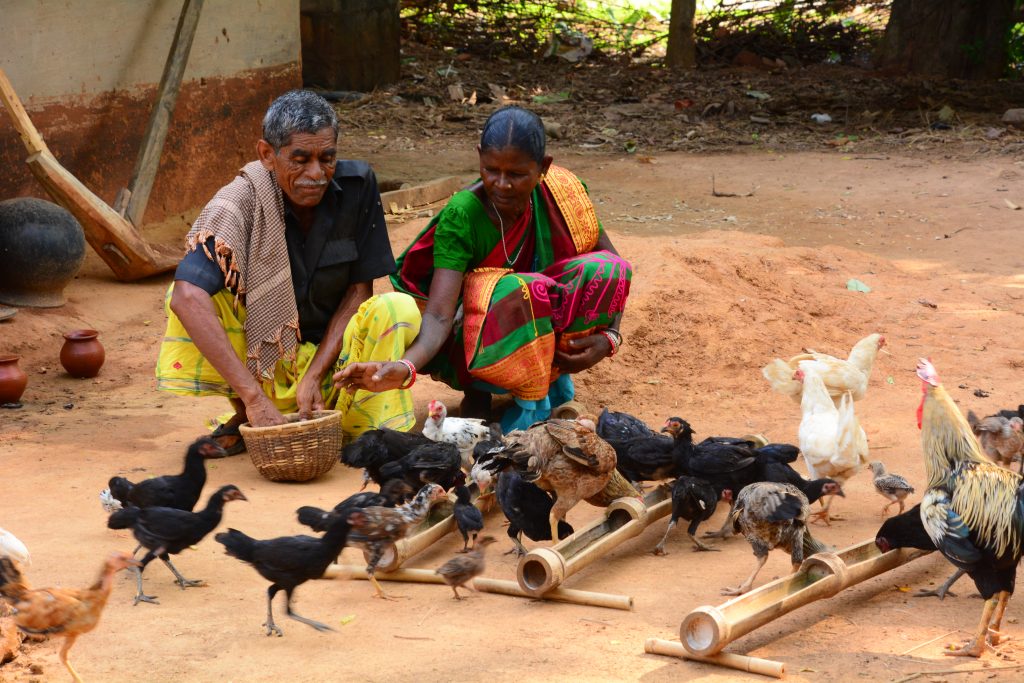
In the rural villages of central Uganda’s Mukono and Mityana districts and eastern Uganda’s Iganga district, thanks to the introduction of the Newcastle Disease vaccine (I-2 ND) which protects poultry against this deadly disease, women have been taking on more roles in their households and communities. Through the income they get from selling their chickens at market, small, informal women-led business enterprises are popping up around the region.
By selling their increased flocks of chicken at local village markets or to buyers who come for them at their homes, they have created a surplus in their income, which provides the business capital to start small informal businesses. These businesses are helping women diversify their livelihoods, contributing to their households’ income in times of distress.

Among these women, there are several who are excelling in poultry husbandry and their healthy, growing flocks are admired in their communities. Since 2014 when the I-2 ND vaccine was introduced in Uganda, they have been keenly vaccinating their chickens; and their flocks have flourished and multiplied in numbers. As a result, they are being sought by other groups of women in their villages, to train them on proper chicken rearing and vaccinate for them.
When Janet Mailuba from Buwolomena Village in Nabaale Sub County of Central Uganda began vaccinating her five chickens against Newcastle disease in 2013, her only aim was their survival. This 41-year-old mother of ten never imagined standing confidently in front of small groups of women in her village to train them on basic chicken rearing techniques and explain the importance of vaccination.

By following the recommended ND vaccination cycle, every three months, and adopting improved chicken rearing, Mailuba now has 30 chickens and two goats and she is one of Brentec Vaccines Limited’s model farmers in her village. During the holidays she sells off mature chickens when the demand and prices are high and earns up to UGX 25,000 (US $6.97) per chicken.
Brentec, through a partnership with the non-profit organisation Global Alliance for Livestock Veterinary Medicines (GALVmed), manufactures and distributes the I-2 ND vaccine locally known as Kukustar, to poultry farmers like Mailuba in rural Ugandan villages. Through GALVmed’s partnership over 25 million I-2 ND vaccine doses have been delivered to poultry farmers.
According to Dr Mamta Dhawan, GALVmed’s gender focal point, it’s important that poultry vaccinations are inclusive of male and female poultry keepers. “When we talk of farmers, the general mindset is that they are men, but women are also farmers and shouldn’t be left out,” said Dr Dhawan. The goal of GALVmed’s gender policy is to ensure that GALVmed-supported projects take into account gender perspectives to maximise impact on the livelihoods of smallholder farmers in developing countries.
With the vaccine protecting her chickens against the disease, Mailuba has a new source of income. Every time she sells one chicken, she earns between UGX 20,000 and UGX 25,000 (US $5.57-6.96). From the income, Mailuba is sharing the household expense burdens with her brick-layer husband by buying soap, food, medicine, uniforms and books for their children.
“My husband now respects me and we live in harmony,” says Mailuba. She has also partnered with four women to form a welfare group for diversifying their livelihoods means, and every week they each save UGX 6,000 (US $1.67) in the group’s kitty. The group has also obtained goats after bartering some of their chicken at the local market – each goat is bartered for seven mature chickens.
Mailuba now has two goats and is planning to buy a Friesian cow, so that she can improve her household nutrition and income through milk consumption and sales respectively. As a result of her being a Brentec model poultry farmer, three women groups in her village have been inviting Mailuba to train them on chicken rearing and vaccination.
Susan Nandiyi from Nambale Village in Iganga district is also a model poultry farmer whose increased income from poultry has provided the opportunity for her take up more household responsibilities. The mother of ten in her late thirties has 30 chickens, but before she began vaccinating two years ago, she had at most five birds at a time. Almost all of Nandiyi’s chickens would succumb to Newcastle Disease and the burden of providing to her family was left to her husband. Today, through improved income from selling chickens, she pays for school fees for their children and buys medicine and food for the family when her husband is unable to or when their crops fail.

“When I see a need in the household I sell one chicken to buy what’s required,” said Nandiyi. Her contribution has added to the wellbeing of the family. She is also happy she can regularly slaughter a chicken for her family at least once a month, without costing her much. This gives her family much needed protein. Like Mailuba, she plans to buy a cow and goats with her savings from selling the chickens.
Nandiyi also encourages women in her village to vaccinate their chickens, having witnessed the benefits first hand. She and other women in her village have also secured consistent chicken buyers so they don’t struggle to market them.
For 36-year-old Harriet Mutesi also from Nambale, the income she gets selling chickens now ensures that her husband includes her in household decision making. “It makes me proud to sit down with him and plan,” said Mutesi. The mother of five buys pens and uniforms for her children and her husband buys books and pays school fees. “I used to feel bad when I couldn’t contribute anything to my children’s education, but now I’m happy,” said Mutesi. Between her and her husband they also decide every school term whose turn it is to pay the fees.
Having been a tailor all her life, 71-year-old Magdalene Muyango from Ngulolo village in Mityana district, decided to rear chickens two years ago to supplement her income. The mother of eight almost quit when she once lost 15 out of her 25 birds in a single week. Through a radio advertisement she learned of the Kukustar vaccine and had her chickens vaccinated first a year agoand every three months since then, by local para-veterinary professionals.

Since vaccinating, Muyango has not lost any chicken to Newcastle disease; currently she has 20 growing chickens. These provide her with eggs for home consumption and selling. The secondary income she gets from the chickens she saves in a local saving group called Mayirye Development Group. The 40 member welfare group consists of both men and women.
“Every week I save UGX 5,000 (US $1.39) and the chickens have really helped me to be getting that money,” said Muyango. The extra income she gets from the chickens has also helped relieve her husband from the burden of providing basic household needs. “I’m happy to see him rested,” said Muyango.
During the implementation of projects, GALVmed ensures its community engagement activities are structured so as to be convenient for women attending according to Dr Dhawan. That means meetings are not scheduled during lunch time or late in the evening when women are busy attending to their households.
Gender discrimination has been found to be a cause of poverty and interventions aimed at poverty reduction need to be gender sensitive, according to GALVmed’s Gender Policy.
(Words and photos by James Karuga.)
 Marandi’s decision to try the new vaccine paid off. His chickens went almost unscathed after administering the vaccine. Over the past year his flock has grown to an impressive 100 chickens. Out of the 100, his family consumed thirty, while another thirty have been sold off providing much needed income. “I will use forty birds for breeding over the next year,” he said.