Showcasing Impact: GALVmed Key Achievements

Over the years, GALVmed through its partners, has implemented impactful programmes across Africa and South Asia, leading to significant achievements.

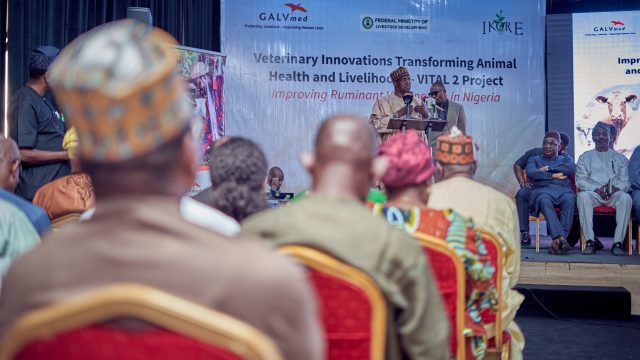
Nigeria Takes a Bold Step Toward Transforming Its Animal Health Sector

Government leaders, veterinary professionals, development partners, academics, and private sector stakeholders came together to deliberate on solutions to the challenges facing the livestock health sector.

New Policy Brief advocates collaborative action to advance access to new veterinary trypanocides for Africa

A new joint policy brief by FAO, WOAH and AU-IBAR advocates for a multi-stakeholder and multi-sectoral collaboration to deliver a new generation of trypanocides for the African livestock sector.

GALVmed, University of Toronto and Biovet Enter New Agreement to Advance Next-Generation Haemorrhagic Septicaemia Vaccine for Africa and South Asia

The candidate vaccine is a novel target identified on the surface of haemorrhagic septicaemia-associated strains of Pasteurella multocida. It has demonstrated robust protection in cattle against lethal challenge with the two serogroups of Pasteurella responsible for HS.

Why gender-intentional programmes are key to livestock systems development

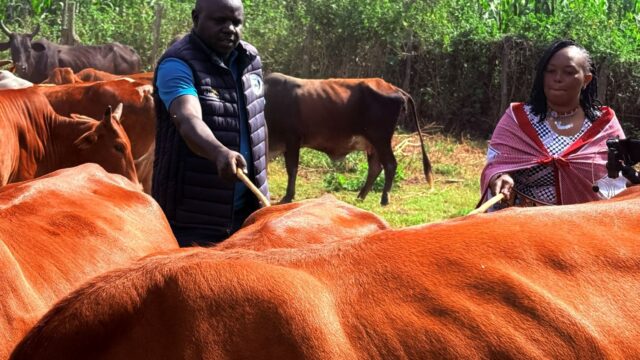
Applying a gender lens to livestock programmes is not an optional add-on, but a strategic necessity. VITAL 2 is a gender-intentional investment, designed to ensure that gender-related barriers and norms are identified and addressed so that women are not excluded from the benefits of ruminant vaccination as markets and delivery systems expand.

Showcasing Impact: GALVmed Key Achievements

Over the years, GALVmed through its partners, has implemented impactful programmes across Africa and South Asia, leading to significant achievements.

The EAC Mutual Recognition Procedure expands its scope 

The MRP has expanded its scope to include ectoparasiticides, aquatic animal medicines, and animal nutritional supplements—broadening its impact and strengthening its relevance across both livestock and aquaculture sectors. 

To truly beat sleeping sickness we need to treat animals too

If Africa can mobilise the investments needed to eliminate sleeping sickness in people, it can and must show the same commitment to protecting the animals that sustain its economy.

Stopping the spread of Peste des Petits Ruminants (PPR) starts with vaccine access in Africa

Imagine that over the course of 10 days, 80 per cent of your livelihood is destroyed. This is a reality for millions of small-scale producers in Africa who depend on sheep and goats for income, nutrition and survival, but have to contend with Peste des Petits Ruminants (PPR), a highly contagious disease with a mortality rate of up to 90 per cent.

The cost of livestock diseases and how vaccination makes a difference

Each year, 20% of livestock production is lost to disease. Vaccination is a vital tool in controlling disease outbreaks and preventing devastating losses.

Vaccinated day-old chicks brings transformational change for Africa’s farmers

In 2021, Ceva Animal Health teamed with GALVmed, with the support of the Gates Foundation, to implement PREVENT. Between 2021 and 2025, 37 hatcheries in 11 countries produced 202 million day-old chicks, creating a net economic benefit of $43 million over the course of the project.