
Africa takes a big step toward strengthening veterinary products regulation
If you have spent any time around animal health or veterinary product regulation in Africa, you have probably heard some version of the same complaint. Every country does things a little differently. Approval requirements vary from one border to the next. Regulatory capacity is uneven — some agencies are well-resourced; others are stretched painfully thin. And the result of all that fragmentation is not just paperwork headaches. It is real delays getting good products to farmers who need them, and it is an open door for substandard products and antimicrobial resistance to creep in.
What PARAN-VPs actually is (and is not)
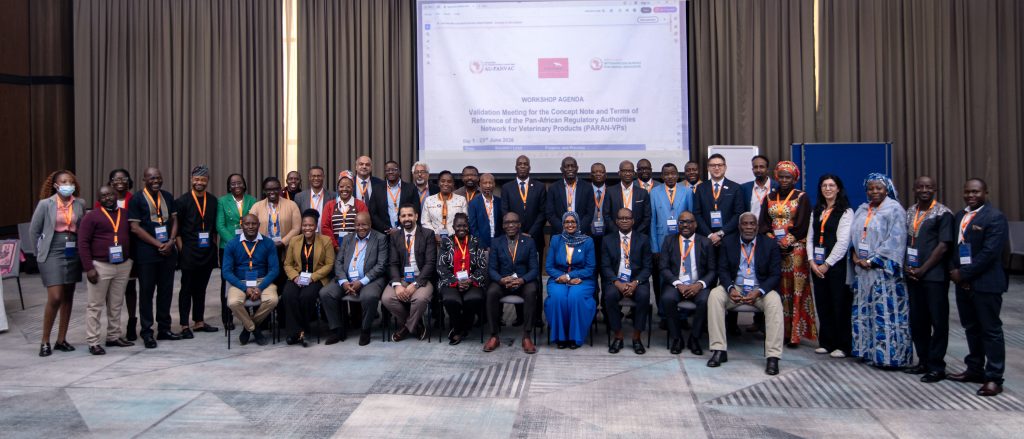
When I recently joined regulators from across the continent for the validation of the Pan African Regulatory Authorities Network for Veterinary Products (PARAN-VP), I left the workshop more optimistic than I expected. As I looked around the room, there was a shared sense of purpose across a group that does not always agree easily, regulators from countries with very different systems, capacities and priorities finding a common frame.
But first, let us clarify what PARAN-VP is not trying to be. It is not a central regulator overriding national authority. Countries still make their own market authorisation decisions and every Member State’s sovereignty over its own regulatory choices stays intact. It is a voluntary platform. PARAN-VP offers coordination: shared guidelines, information sharing, regulatory reliance, and capacity building.
PARAN-VP is explicitly designed to build on what already exists rather than compete with it. It is meant to work alongside frameworks like the African Medicines Agency and existing regional and national systems, strengthening the connections between them instead of adding yet another disconnected layer.
How we got here
The Nairobi validation workshop was not the beginning of this story — it was more like a milestone in a journey that has been building for a few years now.
The journey traces back to the 2023 meeting of regulators and industry in Abuja, where the need for a coordinated regulatory platform was discussed. From there, the idea moved into the African Union system through the Specialized Technical Committee on Agriculture, Rural Development, Water and Environment later that year, and by 2024 the Executive Council had formally endorsed it at the AU Summit.
Then came more groundwork. Technical discussions in Dar es Salaam, followed by a broader conference of regulators and stakeholders in November 2025 helped sharpen the concept and build wider buy-in. By the time we all gathered in Nairobi this June, PARAN-VP was not a proposal anymore. It was already a shared continental vision. The workshop’s job was to confirm it and, more importantly, start figuring out how to actually make it run.
What’s next
The structure we have landed on is deliberately lean: a Network Assembly, a Steering Committee, a Secretariat, and Technical Working Groups tackling specific areas like regulatory guidelines, pharmacovigilance, and antimicrobial resistance.
The next steps are the unglamorous but essential kind — setting up governance structures, getting the Secretariat operational, launching those Technical Working Groups. Early priorities will include assessing the current state of regulatory capacity across countries, developing harmonised guidelines, and piloting approaches to regulatory reliance and information sharing. The Secretariat will be housed at AU-IBAR in Nairobi. How the network sustains itself financially beyond initial partner support is the open question the coming months will need to answer.



This blog was written by Noel Mategyero Aineplan, the Senior Manager of the Better Regulation Project, GALVmed.