Invest in Women to Accelerate Progress
International Women’s Day is a day to reflect on the gender disparities that hinder women’s opportunities worldwide, while advocating for policies and strategies that pave the path to gender equality.
Working in collaboration with partners, GALVmed has implemented, over the years, impactful programmes across Africa and South Asia. These are some of GALVmed’s achievements from 2014 to 2022.
Livestock is a crucial source of income for small-scale livestock producers. Globally, it is estimated that around 78 per cent of the world’s poorest communities rely on agricultural work to support their livelihoods and households. However, livestock diseases represent $358.4 billion in lost production per year.
In order to understand and quantify the causal effects of ND vaccination on poultry production and livelihoods, since 2020, GALVmed has been working with Tufts University and Oxford Policy Management (OPM) to design and implement a Newcastle Disease Vaccine (NDV) intervention paired with a rigorous evaluation in rural areas of Tanzania.
There are just seven years to go until 2030. That means there are just seven years left to achieve the 17 Sustainable Development Goals (SDGs) and its 169 targets. Yet, the world was starkly reminded in July by top United Nations officials ahead of the SDG Summit that it is “tremendously off track” to reach these Goals.
Animal welfare has the power to transform the lives of those who depend on livestock. Well-maintained animals are not only healthier and happier but also more profitable. By living longer and suffering from fewer diseases, they can save their owners considerable sums in medicines, veterinarian bills and the need to purchase or acquire new animals.
Debates about the relationship between livestock and climate change have become dominated by concerns over the carbon and methane emissions of the cattle industry. These concerns are of course valid and need to be part of climate change discussions. But they do not tell the whole story.
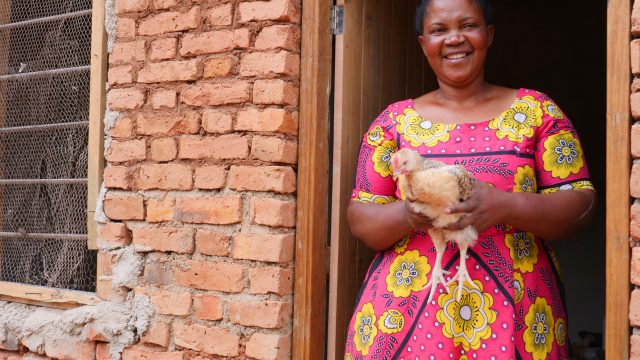
For 33-year-old mother-of-seven and poultry farmer Helena Kindole in Chanya village in Tanzania, one of the main barriers to growing her chicken business is a lack of access to health services. But not for herself or her family – for her animals.
Product development is only the first step in improving livestock health in the world’s lower and middle-income countries. There needs to be an enabling policy and regulatory environment that encourages animal health companies to register, distribute and sell their products in new countries.
GALVmed partnered with SEBI-L to develop a model for practical use for our market development programmes. The model is used to estimate the economic impact of the initiatives on small-scale producers.